Why Is the Moon Orange Tonight The Complete Scientific Guide to This Stunning Sky Phenomenon

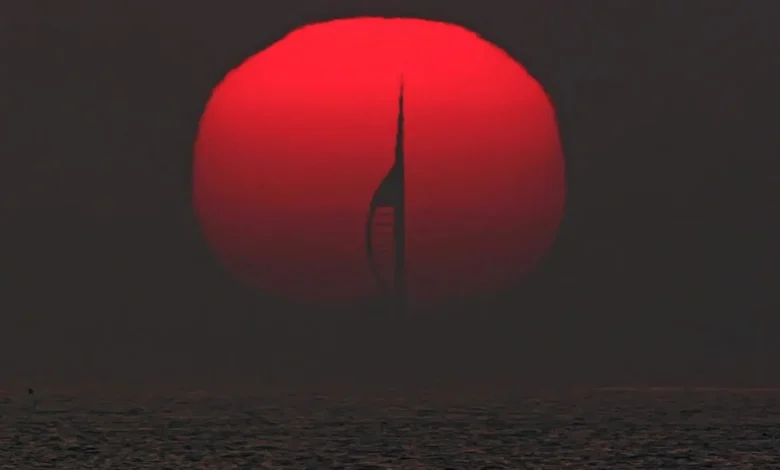
Have you ever stepped outside in the evening, looked up at the sky, and wondered, why is the moon orange tonight ? The sight of a glowing orange moon hanging low on the horizon can be breathtaking, mysterious, and even a little dramatic. Many people assume it’s a rare cosmic event or a sign of something unusual. In reality, this beautiful display is rooted in well-understood scientific principles.
In this in-depth guide, we will explore the real reasons behind an orange moon, how atmospheric conditions influence its color, when you are most likely to see it, and whether it signals anything extraordinary. By the end, you’ll not only understand why the moon turns orange but also appreciate the fascinating science that makes it happen.
The Science Behind an Orange Moon
How Moonlight Really Works
To understand why the moon sometimes appears orange, it helps to know what moonlight actually is. The moon does not produce its own light. Instead, it reflects sunlight. The light we see bouncing off the lunar surface is essentially sunlight that has traveled to the moon and then back to Earth.
Sunlight looks white to us, but it is actually made up of multiple colors combined together. These colors form what we call the visible light spectrum, ranging from violet and blue to red and orange. Under normal conditions, the reflected sunlight appears white or pale yellow when it reaches our eyes.
However, the journey that light takes through Earth’s atmosphere can dramatically change how it looks by the time it reaches you.
The Role of Earth’s Atmosphere
The atmosphere plays a key role in answering the question, why is the moon orange tonight. When moonlight passes through the atmosphere, it interacts with air molecules, dust particles, and other elements suspended in the air.
This interaction is known as scattering. Shorter wavelengths of light, such as blue and violet, scatter more easily. Longer wavelengths, such as red and orange, scatter less. As a result, when the moon is low in the sky, more of the blue light is scattered away before it reaches your eyes, leaving behind the warmer orange and red tones.
This is the same principle that causes sunsets and sunrises to appear red or orange.
Rayleigh Scattering Explained Simply
The specific process responsible for this color shift is called Rayleigh scattering. This scientific concept explains why the sky appears blue during the day and red at sunrise or sunset.
When the moon is near the horizon, its light has to travel through a thicker layer of atmosphere compared to when it is high overhead. The longer the path through the atmosphere, the more scattering occurs. This removes much of the blue light and enhances the reds and oranges.
So if you find yourself asking, why is the moon orange tonight, the simplest answer is that you are seeing the effect of atmospheric scattering at work.
Why It Happens More Near the Horizon
An orange moon is most common when it is rising or setting. At these times, the moon is low on the horizon, and its light must pass through more of the Earth’s atmosphere.
The increased atmospheric thickness intensifies the filtering process. More blue light gets scattered, and the remaining visible light appears orange or even reddish.
As the moon climbs higher into the sky, its color usually shifts back to its familiar pale white or yellow glow because the light travels through less atmosphere.
Environmental Factors That Intensify the Orange Color
Dust and Pollution in the Air
While atmospheric scattering explains the basic science, environmental conditions can make the orange color even more dramatic. Dust, smoke, and pollution particles in the air increase the scattering effect.
In areas with high pollution levels, the moon may appear deeper orange or even slightly red. This is because extra particles enhance the filtering of shorter wavelengths, allowing more warm tones to dominate.
If you are wondering why is the moon orange tonight during a period of hazy or smoggy conditions, air quality may be a major factor.
Wildfires and Volcanic Activity
Large-scale events like wildfires and volcanic eruptions can inject massive amounts of particles into the atmosphere. These particles remain suspended in the air and significantly affect how light travels.
During wildfire seasons, especially in dry regions, people often report unusually vivid orange or red moons. The smoke acts as an additional filter, intensifying the effect of Rayleigh scattering.
Similarly, after major volcanic eruptions, the moon and sun can appear unusually colorful for weeks or even months.
Humidity and Moisture
Moisture in the atmosphere can also play a role. High humidity levels mean there are more water droplets suspended in the air. These droplets can scatter light in different ways, sometimes enhancing warm tones.
Although humidity alone does not usually cause a deep orange moon, it can contribute when combined with dust or pollution. In coastal cities or humid regions, the effect may be more noticeable.
Urban vs. Rural Differences
City environments often have more pollution and artificial light, which can influence how the moon appears. In urban settings, an orange moon may seem more intense due to the combination of atmospheric particles and contrast with city lights.
In rural areas with cleaner air, the moon may still appear orange near the horizon, but the color may be softer and more natural-looking.
Common Myths About an Orange Moon
Is It a Sign of a Major Astronomical Event?
Many people believe that an orange moon indicates a rare astronomical event like a supermoon or a lunar eclipse. While those events can influence how the moon looks, they are not the usual reason behind the orange color.
A supermoon simply means the moon is closer to Earth and appears larger and brighter. It does not automatically change its color. The orange hue is still mostly due to atmospheric conditions.
Does an Orange Moon Mean an Eclipse?
A total lunar eclipse can cause the moon to turn red, often called a “blood moon.” This is different from the typical orange moon seen near the horizon.
During an eclipse, Earth blocks direct sunlight from reaching the moon. The only light that reaches it is filtered through Earth’s atmosphere, creating a deep red glow. This is a specific and relatively rare event.
If you are asking why is the moon orange tonight and there is no eclipse scheduled, the cause is almost certainly atmospheric rather than astronomical.
Is It Related to Weather Predictions?
Some folklore suggests that a red or orange moon predicts storms or other weather changes. While atmospheric conditions influence the moon’s color, there is no scientific evidence that an orange moon directly predicts specific weather events.
However, the same particles that create colorful skies can be associated with certain weather patterns, such as dry and dusty conditions.
Does It Mean the Moon Is Closer?
An orange moon near the horizon often appears larger than usual. This is known as the “moon illusion.” It is a psychological effect rather than a physical change in size.
The moon is not actually closer when it looks bigger or more orange. Your brain simply interprets its size differently when it is near objects like trees or buildings.
When Are You Most Likely to See an Orange Moon?
During Moonrise and Moonset
The most common time to see an orange moon is during moonrise or moonset. These moments occur when the moon is near the horizon, creating ideal conditions for atmospheric scattering.
If you want to experience this phenomenon, check your local moonrise time and look toward the horizon shortly after sunset.
In Late Summer and Autumn
In many regions, late summer and autumn provide favorable conditions for orange moons. Dry air, dust, and agricultural activity can increase particles in the atmosphere.
These seasonal conditions enhance the scattering effect and make the warm colors more pronounced.
After Major Environmental Events
Wildfires, dust storms, and volcanic eruptions often lead to dramatic sky colors. If such events have occurred recently in your region or nearby, the chances of seeing an orange moon increase.
Keep in mind that these effects can extend far beyond the immediate area of the event due to wind patterns.
In Areas With Clear Horizon Views
Location matters. Areas with unobstructed views of the horizon, such as beaches, open fields, or hilltops, provide the best vantage points.
Buildings and mountains can block your view during moonrise, so choosing the right location can make all the difference.
Why the Orange Moon Feels So Dramatic
Psychological Impact of Warm Colors
Warm colors like orange and red naturally evoke strong emotional responses. They are often associated with warmth, passion, and intensity.
When the moon glows orange against a darkening sky, the contrast creates a visually striking scene. This dramatic effect can feel almost surreal.
Contrast With the Night Sky
The deep blue or black sky provides a perfect backdrop for the orange glow. This contrast makes the moon stand out more vividly than when it appears white.
The visual drama can make people pause and reflect, adding to the sense of wonder.
Cultural and Historical Interpretations
Throughout history, people have attached meaning to unusual sky colors. In some cultures, an orange or red moon was seen as an omen or a spiritual sign.
Modern science has replaced superstition with explanation, but the emotional impact remains just as powerful.
Social Media and Shared Experiences
Today, striking sky events quickly spread across social media. When multiple people share photos and ask why is the moon orange tonight, it can amplify the sense that something rare is happening.
In reality, it is a natural and fairly common phenomenon, simply noticed more widely thanks to technology.
Frequently Asked Questions
1. Why is the moon orange tonight but white tomorrow?
The moon’s color depends on its position in the sky and atmospheric conditions. When it is high overhead, its light travels through less atmosphere and appears white. Near the horizon, it looks orange due to scattering.
2. Does an orange moon mean pollution is high?
Not always, but pollution can enhance the effect. Even in clean air, the moon can appear orange near the horizon due to natural atmospheric scattering.
3. Is an orange moon the same as a blood moon?
No. A blood moon occurs during a total lunar eclipse and appears deeper red. A typical orange moon is caused by atmospheric conditions and is much more common.
4. Is it safe to look at an orange moon?
Yes. Unlike the sun, the moon does not emit harmful light. It is completely safe to observe with the naked eye.
5. Can I photograph an orange moon with a smartphone?
Yes, but using zoom and manual settings can improve results. Capturing it near the horizon with foreground objects often creates the most dramatic images.
6. Does the orange color affect tides?
No. The moon’s gravitational pull affects tides, not its color. The orange appearance is purely visual and does not change its physical influence on Earth.
7. How long does the orange color last?
Usually, the orange hue is most visible during moonrise or moonset and fades as the moon climbs higher into the sky.
Final Thoughts
If you ever step outside and wonder, why is the moon orange tonight, you can now appreciate the elegant science behind it. The phenomenon is a beautiful combination of sunlight, atmospheric physics, and environmental conditions.
An orange moon is not a warning sign, a rare cosmic event, or a mysterious anomaly. It is a natural and predictable result of how light travels through Earth’s atmosphere. Understanding the science does not make it any less magical. In fact, it often makes the experience even more meaningful.
The next time you see that glowing orange disc rising above the horizon, take a moment to enjoy the view. You are witnessing a timeless interaction between the Earth, the moon, and the atmosphere that surrounds us.