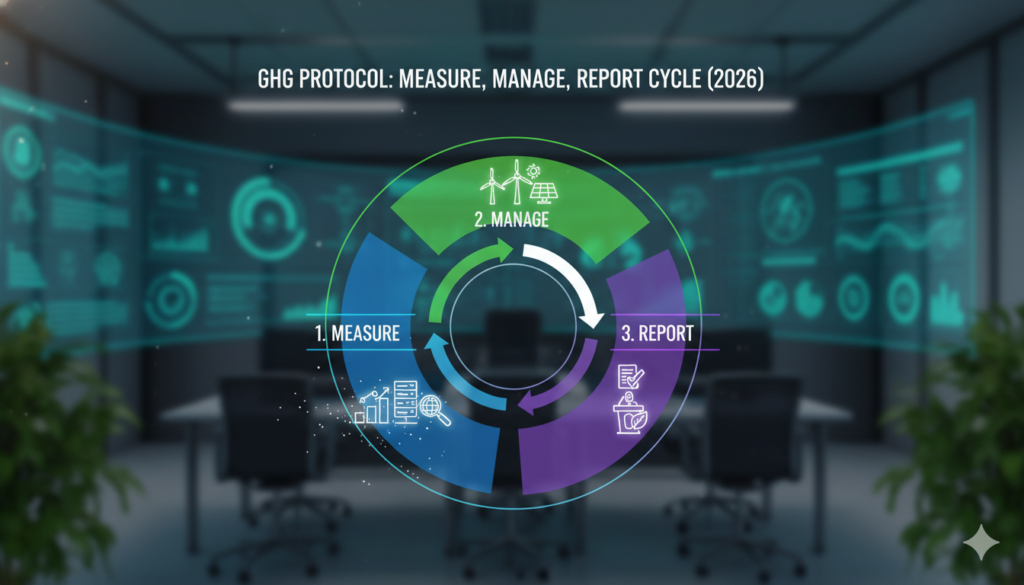
Do you ever wonder how big companies know how much pollution they are making? It is not just a wild guess! They use a special set of rules called the GHG Protocol. This stands for the Greenhouse Gas Protocol. Think of it like a giant ruler or a scale that measures gases that warm up our planet. In 2026, more businesses than ever are trying to be “green.” To do that, they need a standard way to count their carbon footprint. Whether you are a small shop owner or just curious about the environment, understanding these rules is the first step toward a cleaner Earth. We are going to break down how this works in very simple terms so anyone can become an expert on climate tracking today.
What Exactly is the GHG Protocol?
The GHG Protocol is the world’s most popular way to measure greenhouse gas emissions. It was created a long time ago by groups that wanted to help the planet. It provides a blueprint that tells companies exactly which gases to track and how to report them. Without these rules, one company might count their car exhaust while another might ignore it. That would be very confusing! The GHG Protocol makes sure everyone is speaking the same language. It helps leaders see where they are wasting energy so they can save money and help the world at the same time. It is truly the gold standard for environmental math.
Why Do We Need Carbon Accounting?
You might ask why we bother counting gas at all. Well, you cannot fix what you do not measure! Carbon accounting is like keeping a budget for your money, but for the air. By using the GHG Protocol, a business can see if their factories or offices are leaning too hard on fossil fuels. In the year 2026, customers really care about the planet. They want to buy from brands that are honest about their impact. Using the GHG Protocol builds trust because it shows a company is following official rules. It is not just about being “nice”; it is about being responsible and clear with the public.
Understanding Scope 1: Direct Emissions
The first part of the GHG Protocol looks at things the company owns directly. This is called Scope 1. Imagine a delivery van driving down the street. The smoke coming out of that van’s tailpipe is a direct emission. If a company has a big furnace to heat its building, the gas it burns is also Scope 1. Under the GHG Protocol rules, the company must write down exactly how much fuel they used. It is the easiest type of pollution to track because the company has the receipts for the gas. It is like looking at your own kitchen to see how much trash you made today.
Understanding Scope 2: Indirect Energy
Scope 2 is a little bit different but still very important under the GHG Protocol. This category tracks the electricity that a company buys from a power plant. Even though the smoke is coming out of a chimney miles away, the company is still responsible because they used that power. If you leave the lights on all night at your office, your Scope 2 numbers go up. The GHG Protocol helps businesses calculate this by looking at their monthly electric bills. Many companies in 2026 are switching to solar power to make these numbers drop to zero. It is a smart way to go green fast.
Understanding Scope 3: The Rest of the Chain
Scope 3 is the biggest and trickiest part of the GHG Protocol. This covers everything else in a company’s life. Think about the snacks a company sells. How were the ingredients grown? How did the customers get to the store? Even the trash that people throw away after using a product counts here. The GHG Protocol calls these “value chain emissions.” Most of a company’s carbon footprint actually lives in Scope 3. It is hard to measure because it involves other people and other businesses. However, to be a true leader in 2026, you have to try your best to count these hidden numbers.
Summary Table: Breaking Down the Emissions
| Emission Type | What it Covers | Ownership | Difficulty to Track |
| Scope 1 | Company vehicles and onsite furnaces | Owned directly | Easy |
| Scope 2 | Purchased electricity and cooling | Bought from others | Medium |
| Scope 3 | Supply chain, travel, and waste | Outside partners | Hard |
| Net Zero | Balancing all three categories | Goal for 2026 | Ultimate Goal |
How the GHG Protocol Helps the Planet
When a company follows the GHG Protocol, they start to see patterns. Maybe they notice that flying employees across the ocean for meetings creates too much CO2. They might decide to use video calls instead. This shift is exactly what the GHG Protocol is designed to encourage. By putting a number on pollution, it stops being an invisible problem. It becomes a goal to beat. In my experience watching digital trends, transparency is the new “cool.” People love to see a clear chart showing that a brand is actually reducing its footprint. It turns environmental care into a fun and rewarding challenge for everyone.
The Role of Global Standards in 2026
In the year 2026, we have a lot of different rules for different countries. However, the GHG Protocol stays consistent across the globe. Whether a business is in London, New York, or Jakarta, they use the same math. This is great for big international brands because they don’t have to learn ten different systems. Following the GHG Protocol means your data is “compatible” with everyone else’s. It allows investors to compare two companies and see which one is actually better for the Earth. Without a global standard, it would be like trying to play a game where everyone has their own set of rules.
Getting Started with Your Carbon Journey
You don’t have to be a giant corporation to care about the GHG Protocol. Even small businesses are starting to use simplified versions of these rules. First, you gather your utility bills. Then, you look at your fuel usage. Finally, you talk to your suppliers about how they make their goods. The GHG Protocol provides free tools and guides on their website to help you. It might feel a bit like homework at first, but it gets easier every year. Once you have your first report, you will feel a great sense of pride. You are officially part of the solution to climate change!
Future Trends in Carbon Reporting
As we look toward the future, the GHG Protocol is evolving. We are seeing more “real-time” tracking where sensors can tell a company their emissions instantly. In 2026, AI is also helping to fill in the gaps for Scope 3 data. The GHG Protocol will likely update its rules to include these new technologies. Staying up to date is key for any SEO or marketing pro. You want your brand to be seen as a leader, not a follower. Being early to adopt the latest version of these standards shows that you are serious about your legacy and the health of our shared home.
Frequently Asked Questions
1. Is the GHG Protocol a law?
Not exactly. It is a set of rules created by experts. However, many governments now require big companies to follow these rules by law. It is best to treat it as a requirement if you want to stay professional.
2. What are greenhouse gases?
These are gases like carbon dioxide and methane. They trap heat in the air. The GHG Protocol helps us count all of them, not just carbon.
3. Can individuals use the GHG Protocol?
The full version is for big groups, but you can use the same ideas! Tracking your home’s power and car’s gas is basically doing your own mini-version of the protocol.
4. Why is Scope 3 so important?
Because it usually makes up more than 70% of a company’s impact. If you ignore it, you aren’t seeing the whole picture. The GHG Protocol insists on looking at everything.
5. How often should a company report?
Most businesses do a report once a year. This lets them compare this year’s numbers to last year’s to see if they improved.
6. Does using this protocol save money?
Yes! When you find out you are wasting energy, you can stop using it. Less energy used means lower bills for the company.
Conclusion: Taking the Next Step
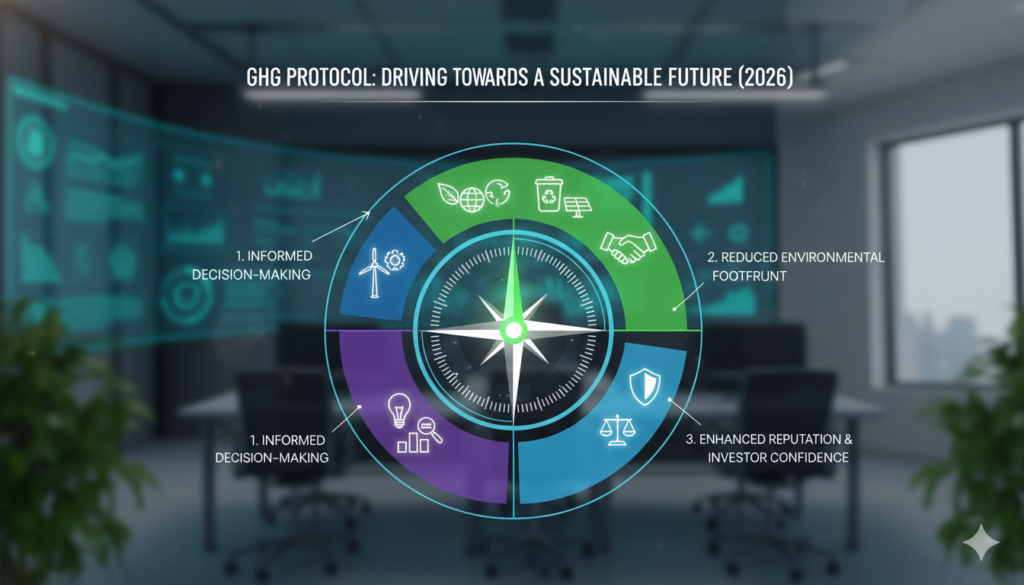
The GHG Protocol is much more than a boring book of math. It is a powerful tool that gives us hope for a greener future. By breaking emissions into Scope 1, 2, and 3, it makes a giant problem feel like something we can actually manage. As we move through 2026, being honest about our carbon footprint is the best way to win the trust of customers and protect the trees, oceans, and air we all love. If you run a business or work in marketing, start looking into how you can apply these standards today. It is a win for your brand and a huge win for the planet! Let’s keep our air clean together.