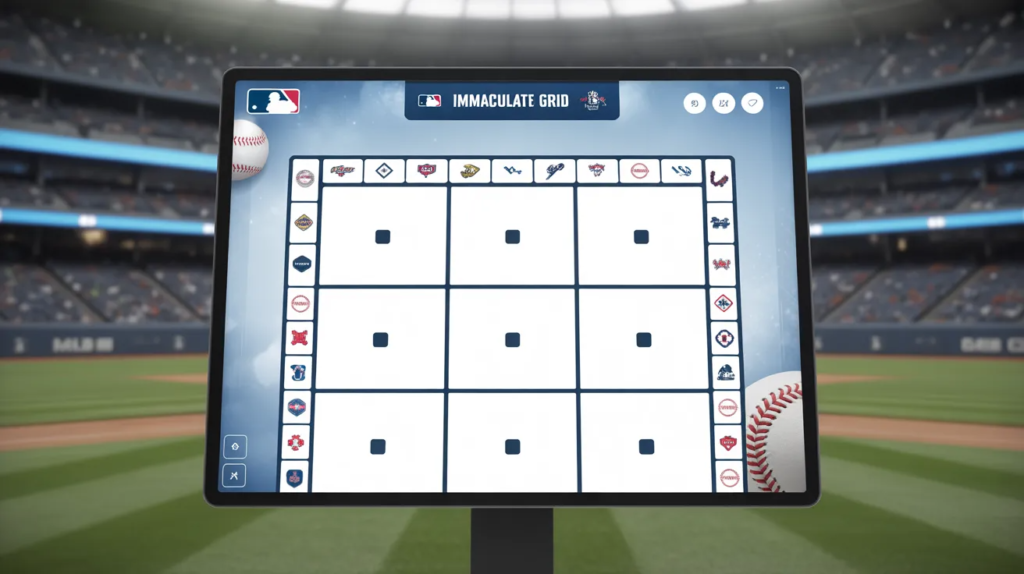
If you love baseball and puzzles, you probably already know about the MLB Immaculate Grid. It is a daily trivia game that tests how much you know about baseball history. Think of it like Sudoku but with baseball players! Every morning, a new 3×3 grid appears. Your job is to fill all nine boxes with players who fit the specific categories for that row and column.
The game has become a huge hit for fans because it is simple yet very challenging. You only get nine guesses. If you get one wrong, you can’t have an “immaculate” day. It is all about being perfect and finding those forgotten legends from years ago. Whether you are a casual fan or a stat nerd, the MLB Immaculate Grid is the best way to start your day with some sports fun.
How to Play the MLB Immaculate Grid Every Day
Playing the MLB Immaculate Grid is easy to start but hard to master. Here are the basic rules you need to know:
- The Grid: You see a 3×3 square. There are labels on the top and on the left side.
- The Goal: Find a player who matches both the top label and the side label. For example, if the top says “New York Yankees” and the side says “Los Angeles Dodgers,” you need a player who played for both teams.
- Nine Guesses: You only get nine tries. To be “immaculate,” you must get every single square right without a single mistake.
- No Repeats: Once you use a player’s name in the MLB Immaculate Grid, you cannot use them again in that same day’s puzzle.
- Active or Retired: You can use current players or stars from the past. Even players from the Negro Leagues often count!
Understanding the Rarity Score in MLB Immaculate Grid
The real “game within the game” in the MLB Immaculate Grid is the rarity score. When you finish your grid, the game gives you a percentage for each player you chose. This number shows how many other people picked that same person.
If you pick a famous superstar like Babe Ruth for a Yankees square, your percentage will be very high. But if you pick a bench player from the 1970s, your percentage will be very low. A lower total rarity score is better! It proves that you have deep knowledge of the game. Hardcore players always try to find the most obscure names to keep their MLB Immaculate Grid rarity score as close to zero as possible.
MLB Immaculate Grid: Quick Reference Table
| Feature | Details |
| Grid Size | 3×3 (Total of 9 squares) |
| Daily Refresh | Every day at 9:00 AM ET |
| Maximum Guesses | 9 (One for each square) |
| Scoring | 0-9 correct + Rarity Score |
| Data Source | Baseball-Reference |
| Player Eligibility | Must have played at least one MLB game |
Top Tips to Master the MLB Immaculate Grid
To get a perfect score on the MLB Immaculate Grid, you need a strategy. Don’t just type in the first name that comes to mind. Take a second to think about “journeymen”—players who played for many different teams. These guys are the “cheat codes” of the MLB Immaculate Grid.
Another great tip is to remember specific awards and stats. Sometimes a square will ask for a “Gold Glove Winner” or someone with “300 Career Home Runs.” Knowing which players reached these milestones while playing for certain teams will make you an MLB Immaculate Grid expert in no time.
Why the MLB Immaculate Grid is So Addictive
Why do thousands of people play the MLB Immaculate Grid every morning? It’s because it feels like a mini-history lesson. It reminds us of players we haven’t thought about in years. You might find yourself searching through old box scores or looking at your childhood baseball card collection just to find one name for the MLB Immaculate Grid. It connects fans of all ages, from kids learning the game to grandparents who remember the legends of the 1950s.
Common Categories in the MLB Immaculate Grid
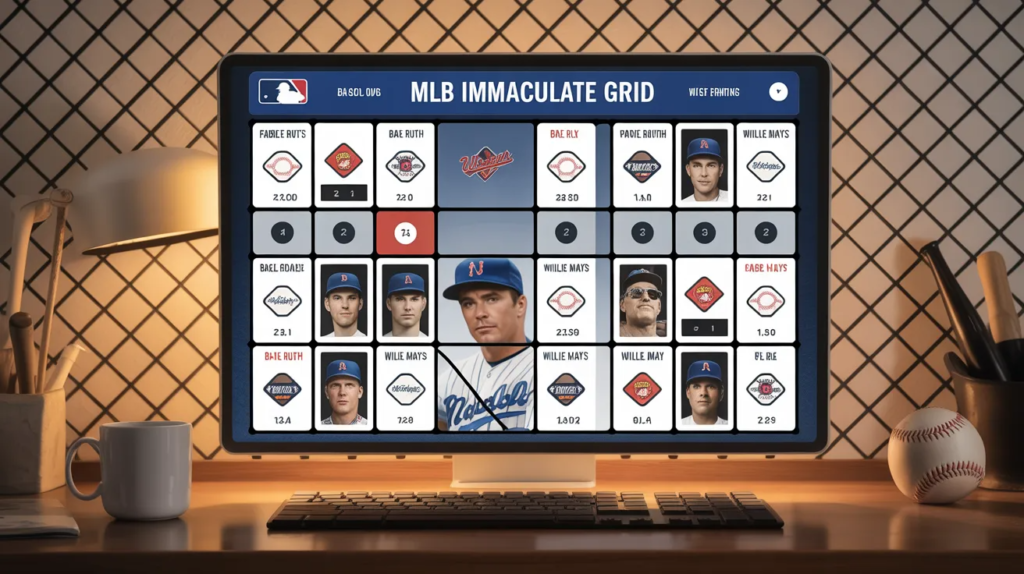
You will see several types of categories when you play the MLB Immaculate Grid. Some are team-based, like “Red Sox” or “Cubs.” Others are based on statistics, such as:
- .300 Batting Average Season
- 20+ Win Season (Pitchers)
- 3,000+ Career Hits
- Rookie of the Year Winners
Learning which teams often trade with each other can also help. For example, many players have moved between the Athletics and the Blue Jays over the years. Knowing these “pipeline” teams can give you a huge advantage in the MLB Immaculate Grid.
How to Find Rare Players for Your Grid
If you want a low rarity score in the MLB Immaculate Grid, stay away from Hall of Famers. Instead, think about the “middle-of-the-pack” players. Think about relief pitchers who moved teams every two years. These players are often the secret to a great MLB Immaculate Grid result.
You can also use the “Randomizer” tools online to practice. Looking at old rosters from teams you don’t follow closely is another way to expand your “mental database.” The more players you know, the easier the MLB Immaculate Grid becomes!
The Role of Baseball-Reference in the Game
The MLB Immaculate Grid is powered by data from Baseball-Reference. This is the “gold standard” for baseball stats. If a player appeared in just one game for a team, they count! This is why the MLB Immaculate Grid is so fair. It relies on cold, hard facts. If you aren’t sure if a player qualifies, you can usually look them up on the site after you finish your daily grid to see where you might have gone wrong.
Can You Play Other Sports Grids?
Yes! While the MLB Immaculate Grid was the first one, there are now versions for the NFL, NBA, NHL, and even soccer. However, for many fans, baseball is the best fit for this format because it has so much history and so many unique statistics. The MLB Immaculate Grid remains the most popular version of the game because baseball nerds love their numbers!
Making the MLB Immaculate Grid a Social Event
Many friends have group chats where they share their MLB Immaculate Grid scores every day. It’s a fun way to compete without being too serious. You can “show off” your knowledge of a random backup catcher from the 90s and earn bragging rights for the day. Sharing your MLB Immaculate Grid results on social media is also a great way to find other fans who love the game as much as you do.
Frequently Asked Questions
1. Does a player have to finish the season with a team to count?
No! As long as the player appeared in at least one game (regular season or postseason) for that team, they are a valid answer for the MLB Immaculate Grid.
2. What happens if I get a square wrong?
If you guess incorrectly, that square turns red, and you lose one of your nine guesses. You can no longer get a perfect 9/9 “immaculate” score for that day.
3. Are Negro League players included in the MLB Immaculate Grid?
Yes! The game often includes stats and teams from the Negro Leagues, which is a wonderful way to honor that part of baseball history.
4. How is the rarity score calculated?
It is the sum of the percentages of all your correct answers. If you got 1% on every square, your total score would be 9. Lower is always better in the MLB Immaculate Grid.
5. Can I use the same player twice in one grid?
No. Even if a player fits two different squares, you can only use their name once per daily MLB Immaculate Grid puzzle.
6. When does the new grid come out?
A fresh MLB Immaculate Grid is posted every day at 9:00 AM Eastern Time.
Conclusion
The MLB Immaculate Grid is more than just a game; it is a daily celebration of baseball. It challenges your brain, brings back great memories, and connects you with a huge community of fans. Whether you are trying to get a 9/9 score or just looking for a fun way to spend five minutes, the MLB Immaculate Grid is the perfect choice. So, grab your virtual cap, think of those rare players, and go make your grid immaculate today!